RCORP - Rural Center of Excellence on SUD Prevention

Search pages...

RCORP - Rural Center of Excellence on SUD Prevention

Search pages...

RCORP - Rural Center of Excellence on SUD Prevention

Amber's Story

April 15, 2024

April 15, 2024

Videos
Videos

Transcript

My name is Amber, I'm 33 years old, and I grew up in the Greater Rochester area. I grew up in a household where I was exposed to drugs and alcohol early on, and I began to experiment with substances at the age of 10 years old. By 16, I was intravenously using heroin. And shortly after that, I found myself in a severe domestic situation, and I think I turned inward more towards my disease, not really knowing where to go, and I became a habitual heroin user for about seven years.

I have six children. I've since, just recently, completed my associate's degree, and I run a business. I'm a self-employed tattoo artist. And I don't have a lot of money, but I am a rich woman.

I am rich in relationship. I have beautiful relationships in my life, I've repaired relationships in my life, and there are beautiful climactic movies and books written about the life that I get to live. I think that maybe doctors being more familiar with the peer programs or outreach facilities. Like, I know that they don't need to be consumed by it but just maybe have some information to reference and to distribute when coming into contact with addicts in the emergency department and, you know, maybe making yourself familiar with these references that you're giving to people, like, "I know this professional, they do very well.

Please reach out to them." "If you're interested in recovery, I know that this other agency or this facility can help you." And so just keeping in mind or maybe adding that to their tool belt or references to encourage individuals to seek out recovery, you know, to let them know that they know of individuals who have found recovery and just plant that seed of hope into another person. I don't really think it would be ultra time-consuming, but I think that that would be extremely helpful.

Transcript

My name is Amber, I'm 33 years old, and I grew up in the Greater Rochester area. I grew up in a household where I was exposed to drugs and alcohol early on, and I began to experiment with substances at the age of 10 years old. By 16, I was intravenously using heroin. And shortly after that, I found myself in a severe domestic situation, and I think I turned inward more towards my disease, not really knowing where to go, and I became a habitual heroin user for about seven years.

I have six children. I've since, just recently, completed my associate's degree, and I run a business. I'm a self-employed tattoo artist. And I don't have a lot of money, but I am a rich woman.

I am rich in relationship. I have beautiful relationships in my life, I've repaired relationships in my life, and there are beautiful climactic movies and books written about the life that I get to live. I think that maybe doctors being more familiar with the peer programs or outreach facilities. Like, I know that they don't need to be consumed by it but just maybe have some information to reference and to distribute when coming into contact with addicts in the emergency department and, you know, maybe making yourself familiar with these references that you're giving to people, like, "I know this professional, they do very well.

Please reach out to them." "If you're interested in recovery, I know that this other agency or this facility can help you." And so just keeping in mind or maybe adding that to their tool belt or references to encourage individuals to seek out recovery, you know, to let them know that they know of individuals who have found recovery and just plant that seed of hope into another person. I don't really think it would be ultra time-consuming, but I think that that would be extremely helpful.

Transcript

My name is Amber, I'm 33 years old, and I grew up in the Greater Rochester area. I grew up in a household where I was exposed to drugs and alcohol early on, and I began to experiment with substances at the age of 10 years old. By 16, I was intravenously using heroin. And shortly after that, I found myself in a severe domestic situation, and I think I turned inward more towards my disease, not really knowing where to go, and I became a habitual heroin user for about seven years.

I have six children. I've since, just recently, completed my associate's degree, and I run a business. I'm a self-employed tattoo artist. And I don't have a lot of money, but I am a rich woman.

I am rich in relationship. I have beautiful relationships in my life, I've repaired relationships in my life, and there are beautiful climactic movies and books written about the life that I get to live. I think that maybe doctors being more familiar with the peer programs or outreach facilities. Like, I know that they don't need to be consumed by it but just maybe have some information to reference and to distribute when coming into contact with addicts in the emergency department and, you know, maybe making yourself familiar with these references that you're giving to people, like, "I know this professional, they do very well.

Please reach out to them." "If you're interested in recovery, I know that this other agency or this facility can help you." And so just keeping in mind or maybe adding that to their tool belt or references to encourage individuals to seek out recovery, you know, to let them know that they know of individuals who have found recovery and just plant that seed of hope into another person. I don't really think it would be ultra time-consuming, but I think that that would be extremely helpful.

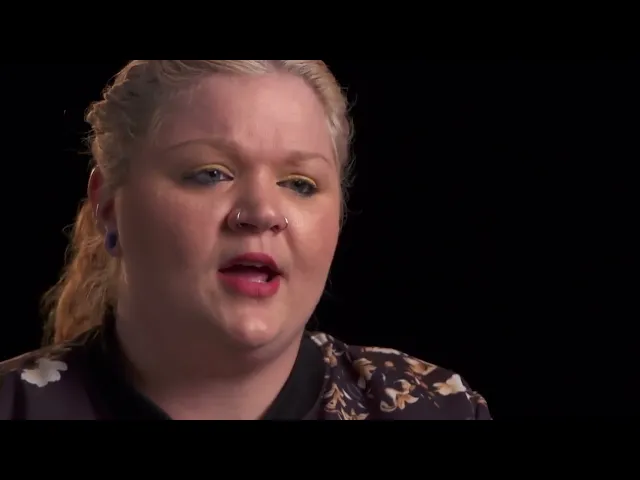
Amber has been in recovery for five years. A mother of six, she recently earned her associate degree and runs her own business. Providing information in the ED about peer programs or outreach facilities where people can seek out recovery, she says, can “plant that seed of hope.”
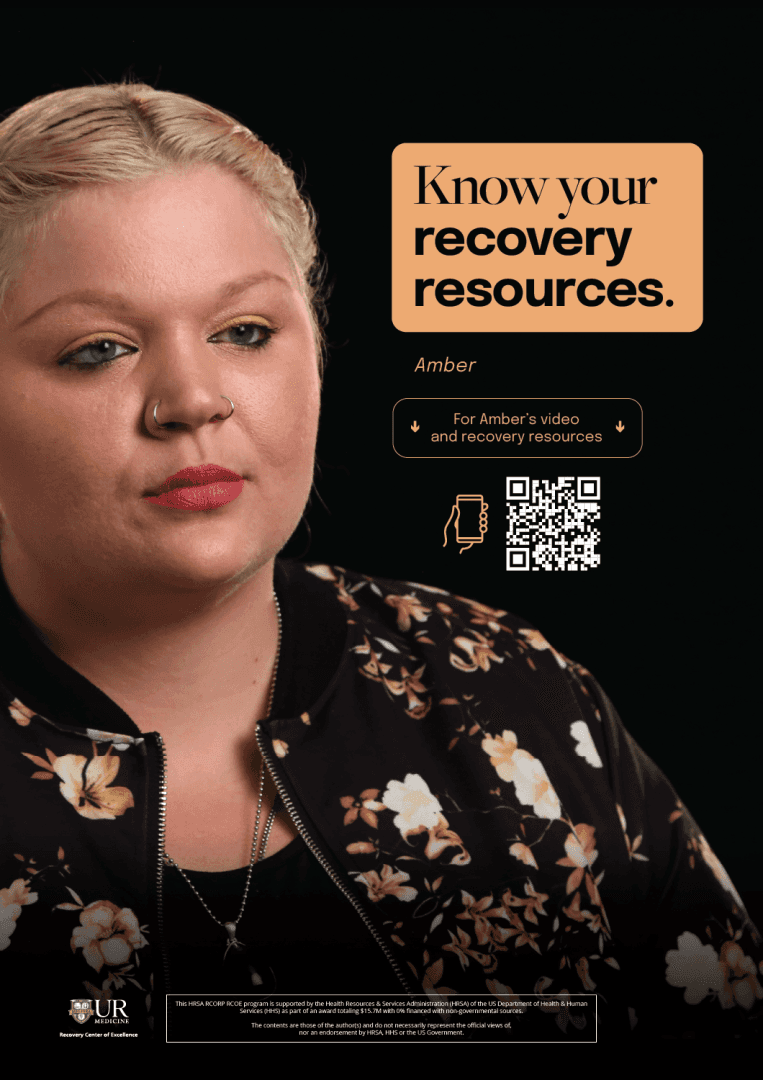
Amber's Poster (PDF, 343.51 KB)

This HRSA RCORP RCOE program is supported by the Health Resources & Services Administration (HRSA) of the US Department of Health & Human Services (HHS) as part of an award of $3.33M in the current year with 0% financed with non-governmental sources.

The contents are those of the author(s) and do not necessarily represent the official views of, nor an endorsement by HRSA, HHS or the US Government.

As the Rural Communities Opioid Response Program (RCORP)-Rural Center of Excellence on SUD Prevention, UR Medicine Recovery Center of Excellence provides access to a wide range of resources on relevant topics. Inclusion in this document does not imply endorsement of, or agreement with, the contents by UR Medicine Recovery Center of Excellence or HRSA.  

© Copyright 2025 University of Rochester Medical Center

This HRSA RCORP RCOE program is supported by the Health Resources & Services Administration (HRSA) of the US Department of Health & Human Services (HHS) as part of an award of $3.33M in the current year with 0% financed with non-governmental sources.

The contents are those of the author(s) and do not necessarily represent the official views of, nor an endorsement by HRSA, HHS or the US Government.

As the Rural Communities Opioid Response Program (RCORP)-Rural Center of Excellence on SUD Prevention, UR Medicine Recovery Center of Excellence provides access to a wide range of resources on relevant topics. Inclusion in this document does not imply endorsement of, or agreement with, the contents by UR Medicine Recovery Center of Excellence or HRSA.  

© Copyright 2025 University of Rochester Medical Center

This HRSA RCORP RCOE program is supported by the Health Resources & Services Administration (HRSA) of the US Department of Health & Human Services (HHS) as part of an award of $3.33M in the current year with 0% financed with non-governmental sources.

The contents are those of the author(s) and do not necessarily represent the official views of, nor an endorsement by HRSA, HHS or the US Government.

As the Rural Communities Opioid Response Program (RCORP)-Rural Center of Excellence on SUD Prevention, UR Medicine Recovery Center of Excellence provides access to a wide range of resources on relevant topics. Inclusion in this document does not imply endorsement of, or agreement with, the contents by UR Medicine Recovery Center of Excellence or HRSA.  

© Copyright 2025 University of Rochester Medical Center