
First Day Forward Program: An Overview
Videos
Other
Created through a Rural Communities Opioid Response Program (RCORP)-Implementation grant, First Day Forward (FDF) is a jail reintegration program that aims to connect individuals to resources, both during incarceration and after their release. This project by St. Claire HealthCare, a member of the Northeast Kentucky Substance Use Response Coalition, strives to give those with substance use disorder (SUD) a true “First Day Forward” as they re-enter the community.
Transcript
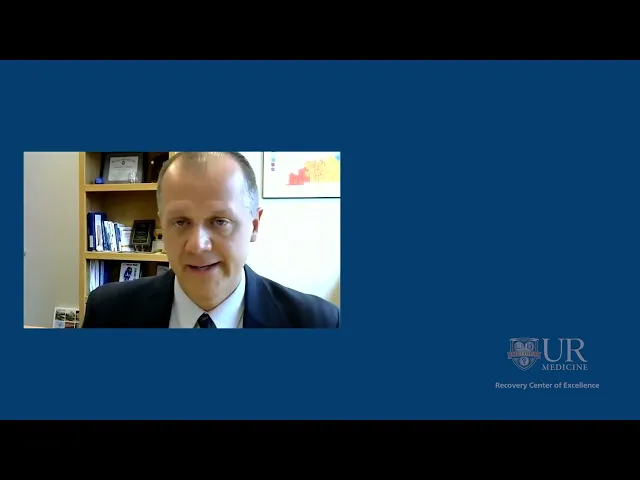
[David A. Gross, MPA]
The First Day Forward initiative really grew out of the inmate interviews that
we have done in, gosh I guess at this point, in six jails across northeastern
Kentucky where we sat down with individuals that had been arrested on drug-
related charges, had a self-identified substance use disorder, and were willing to
be interviewed about what had led them to their current situation, what programming
was available to them in the jail, and what programming we could put together as a
coalition upon their release. So that led us to do some brainstorming. We came up with
the idea for a program, and one of Dr. McClain’s colleagues, Wendy Fletcher,
was actually the person who coined the phrase First Day Forward—that really targeting
education to inmates while they’re still incarcerated but really focused on that
first day of release.
First Day Forward takes these peer-support individuals from across our region,
links them with those inmates, does a month to three months of engagement
while they're still incarcerated, picks them up from the jail at the day of their
release, gets them whatever necessities they might need at that point. During
their incarceration, we've been working with them to make sure where you
go in upon release, do you need any kind of treatment linkages upon the
point of your release, what are you thinking in terms of employment. So we're
working with them on all those types of activities to make sure that they
have a chance. I mean that's all these individuals want and need is a chance to
to get on the right path toward recovery upon their release.
So First Day Forward, we're currently providing that service in three counties within our
region. We've had phenomenal success. Just recently one of the first inmates
that we engaged with had gotten released and had gone through the year
of sobriety and then went and got the training to become a peer-support individual
himself. So that is as big of a success story as you can possibly have, somebody who
was in jail that we connected with them and now they are doing what we want to have
others in the region do—tell their story and be an inspiration to others.
- [Cheryl McClain, MD]
The incarcerated population is considered very vulnerable and high risk from
an addiction or MOUD standpoint. When they go into jail if they've been utilizing or
using illicit drugs, heroin, they have developed a tolerance to it so their tolerance is
very, very high. During incarceration they go through the withdrawal. That tolerance is
gone. They get out, they have a high, high risk of sudden death from overdose.
That's the number one cause of death within the first two to four weeks of release for
inmates because they don't understand the risk of going and using. In addition, now
that we have the fentanyl on board and being laced in the heroin, that also increases
the risk of death to these patients who were incarcerated and now released without any
education or knowledge, and so part of hopefully the First Day Forward is some of that
education regarding the tolerance to the heroin going in and then the lack of tolerance
coming out and the increased risk.
- [David A. Gross, MPA]
Employment is so key to this. I mean you can have various other things in place,
but if these individuals upon release can't find a job then the chance of them relapsing,
being right back in that same situation, are much higher.
So we've done a lot of programming within our region to try to put things into place
to change the stigma that so many individuals unfortunately still have about
individuals who, even if it was in their past, there's still so much stigma about people
that ever misused prescription medications or abused illicit drugs. So we're currently
doing employment forums across the region where we have peer-support
specialists that are doing presentations to employers across the region telling their story
about how they once were addicted, now they're in recovery, and that there are
numerous other individuals like them across the region that can be very good
employees for those employers across the region and can really be a new source of
employment and workforce development within the region.
FDF began with a focus on three counties in northeastern Kentucky: Clark (started September 2020), Mason (started September 2021), and Powell (starting September 2022). Through a second RCORP-Implementation grant, FDF was initiated in the Montgomery County Regional Jail in September 2021 as well. Peer support specialists are screening individuals for program criteria including anticipated release to one of these counties, self-identified SUD, and willingness to participate.
When candidates are accepted into the program, peer support specialists immediately begin working with them. They provide cognitive life skills education and work with participants on their personalized pre-release and post-release case plans. Peers can help with a range of other steps, including expungement information, social security card applications, birth certificate requisition forms, applications for medical cards, naloxone training, local resource guides, employment opportunities, and treatment options. Ideally, peers begin meeting with individuals a month before their release.
After release, the participant’s post-release case plan begins. The peer provides a safe ride from the corrections facility directly to the community or to a treatment center and makes sure the participant’s basic needs are met. The peer connects the individual to community resources such as housing, employment opportunities, self-help meetings, medications for opioid use disorder (MOUD) treatment if desired, primary care, and case management. The peer is also available to attend doctors’ visits and NA/AA meetings and appointments to apply for Medicaid, an identification card, Supplemental Nutrition Assistance Program, etc.
For the first 30 days after release, the participant has weekly face-to-face contact with the peer. Days 31 through 60, that face-to-face contact occurs biweekly. Days 61-120, the participant has monthly phone calls with the peer that continue for the duration of the grant project.
As of September, FDF had begun serving 45 participants, both male and female, in Clark County. At this time, most participants are still incarcerated. Eight have been released into an SUD residential treatment facility.
FDF’s new RCORP grant from the Health Resources and Services Administration is supporting provision of pre-release naltrexone injections to those who are interested in this treatment. Pre-release naltrexone suppresses cravings for opioids that can lead to relapse and overdose for individuals whose tolerance has been reduced during incarceration. The new grant allows First Day Forward to expand to Montgomery County and to provide pre-release naltrexone injections for the Rowan County jail’s reentry program.
Below are testimonials from three participants in the program:
The benefits of the FDF program have been amazing for me personally. I can now see what makes me tick and what leads me to think that I can use. It's all excuses. I have to work on myself and figure out why I turn to use before I can live a better life. The reason I ended up with a record is because I would rob anyone to make myself feel “well.” This is true for most people like me. When it comes to my anger, I have learned I use it as an excuse because I can't let go of my trauma. Until I get to the root of my past, I will continue to make the same mistakes. This program helped me to realize all of this. It's refreshing to finally have something that helps me understand where I went wrong.
—Donnie, FDF participant, Clark County
First Day Forward was really beneficial for my recovery. It helped me connect to the recovery community within Clark County and the resources I needed to attain long term recovery. If it wasn’t for this wonderful program I would have gone back to using drugs/alcohol. This would have ultimately led to death or jail. I am forever grateful for this program and encourage all who can to participate. I have been moving forward since the first day of my release!
—Brandon, FDF participant, Clark County
My name is Casey, I am a 35-year-old heroin addict from Winchester, KY. My clean date is 11/05/20. I am a client of ART [Achieving Recovery Together] and in a program called First Day Forward. … this is how it helped save my life.
I can remember sitting in jail as a result of my addiction feeling hopeless, alone, and totally lost. Having zero ties to anyone in recovery or any support to help me stay clean outside of jail. I heard about a program called First Day Forward that ART had just started and all I knew is that it was for addicts like me. So I signed up. I am so grateful for that decision because I know it’s a big part of why I am still clean today.
First Day Forward gave me hope and the support I truly needed. They helped me start my recovery from inside the jail. The program helped me with so many things from finding me a bed at a treatment center, driving me from jail to the treatment center. They bought me clothes, hygiene items, helped me get my birth certificate, social security card, just so many things, … but most of all they gave me hope and support. They helped love me back to life and gave me the strength in knowing I wasn’t alone anymore. It’s a group of people just like me and I love them all.
First Day Forward changed my life and put people in my path who believe in me and helped me to believe in myself. Thank you, with all of my heart, First Day Forward and everyone at ART!
—Casey, FDF participant, Clark County
First Day Forward could have a positive impact for individuals like Donnie, Brandon, and Casey and for communities. Data will be collected throughout the project to assess recidivism, employment rates, housing linkages, and other outcomes. Having expanded the program to Montgomery County and to provide support to the re-entry program in Rowan County, St. Claire is in the process of submitting a new grant to replicate FDF in Carter County.
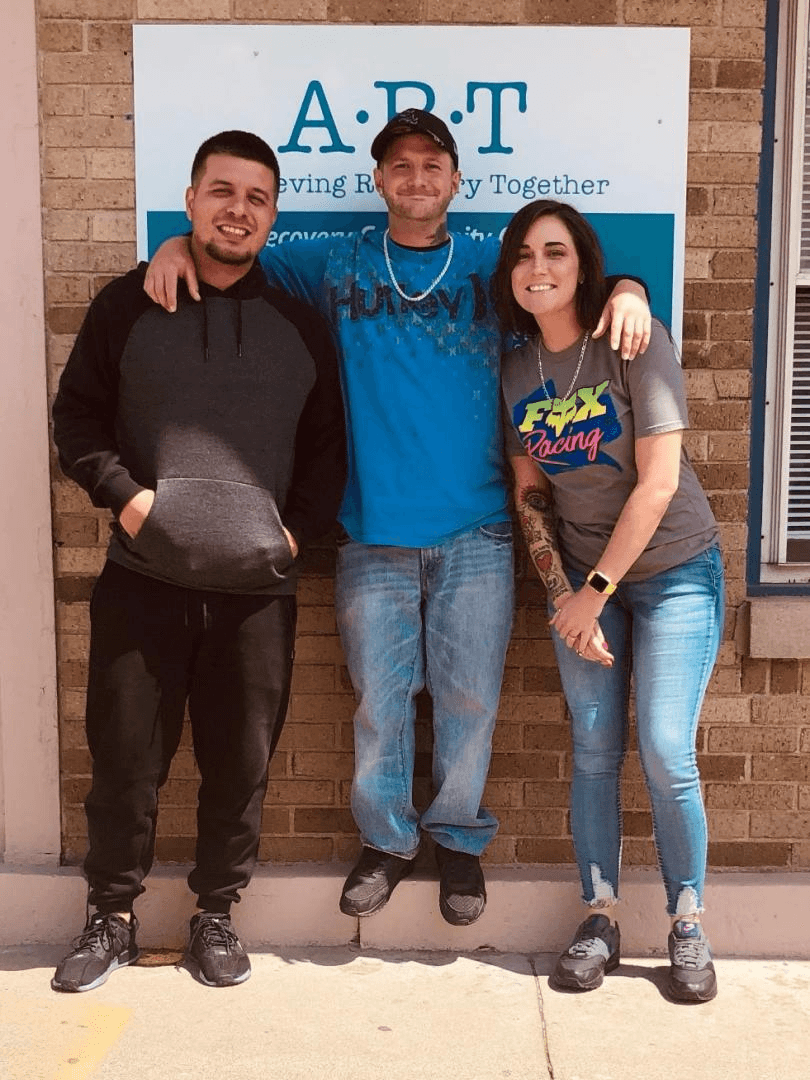
Brandon (center), a First Day Forward participant, and Ryan and Kelly, peer support specialists
This article was adapted from content provided by St. Claire HealthCare.
