

Interventional Pain Management Care Options for Rural Primary Care Clinicians
Prevention
Main points
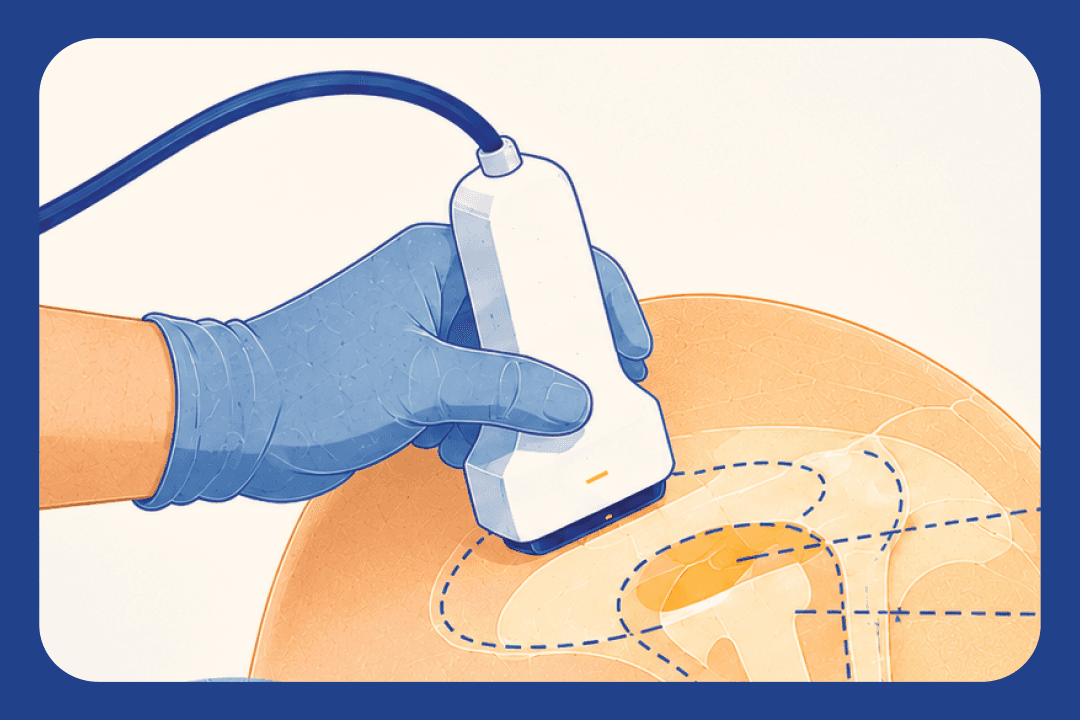
Provide an overview of procedures that can be performed in-office with ultrasound guidance or anatomical landmarks.
Provide information related to each procedure, including:
Review indications for specific procedures.
Discuss medications to be injected for each procedure.
Highlight risks of each injection.
Provide suggested patient follow-up care.
Rural considerations
Patients in rural communities often face significant barriers to specialist access. The ability of primary care physicians to perform simple interventional pain management procedures represents a critical component of patient care, including decreasing time to symptom relief.
The interventions listed below were selected because they are effective, relatively low-risk interventions that address common pain conditions. These procedures require relatively minimal equipment investment and are feasible to implement even in resource-limited rural practices.
By expanding the procedural toolkit available in rural primary care practices, we can ensure patients receive timely, effective treatment for common painful conditions.
General considerations
Interventional procedures including joint, bursa, and muscle injections as well as peripheral nerve blocks are usually reserved for after a trial of conservative measures, such as physical therapy, stretching exercises, and oral medications, have failed to provide adequate relief.
Appropriate training is essential before performing interventional procedures independently, with hands-on, in-person courses preferable, complemented by online courses or video instruction.
Prior to a procedure, a review of pertinent medical history, medications, and allergies should be conducted. Informed consent should be obtained, including risks, benefits and alternatives of the proposed treatment. Patients with bleeding disorders, those taking anticoagulant medications, or those with an active systemic infection or local infection near the injection site may not be suitable candidates.
Steroid injections can increase blood glucose levels, so caution is required for patients with uncontrolled diabetes. Steroid burden should also be considered if the patient is receiving multiple steroid injections from one or multiple providers. The goal would be a maximum of 3-4 steroid injections per 12-month period.
If surgery is planned, it is best to check with the surgeon before providing a steroid injection for the patient, as some may want to wait up to 3 months after steroids are given to perform surgery.
Example checklist:
Medication allergies
Latex allergies
Current antibiotics
Current anticoagulants
Recent fevers or chills
History of diabetes
Current use of steroids
Possible risks include (but are not limited to) local or systemic infection, bleeding, nerve damage, allergic reactions to the injected medication, skin discoloration, and potential damage to structures around the injection area, such as tendons or muscles. Intravascular injection can lead to local anesthetic systemic toxicity (LAST), possibly causing seizures or cardiac arrhythmia.
Patients are advised to rest the treated area for the remainder of the day and gradually resume normal activities over the following day(s). Patients may experience soreness or bruising at the injection site, which typically resolves within a few days. Ice may be beneficial to reduce post-procedure pain. Follow-up appointments are typically scheduled to assess the effectiveness of the injections and determine if additional treatments or interventions are necessary. In some cases, a series of injections may be recommended to achieve optimal pain relief and improved function.
Procedures
Trigger point injections¹ ²
Indication: Myofascial pain syndrome, presence of trigger points, or hyperirritable spots within taut bands of skeletal muscle fibers, causing localized and radiating pain on palpation.
Common areas include: Neck muscles, including the trapezius, and the lower back. Avoid injection close to the skull base or midline spine to minimize the risk of accidental intrathecal injection.
Specific risks: Pneumothorax if the trigger point injections are performed in the thoracic region.
Medications: Commonly 0.25% bupivacaine. Corticosteroids may be added, such as 40 mg methylprednisolone. Dry needling (inserting a needle into the trigger point without injecting any medication) is also a technique employed in some cases and has similar efficacy but possibly increased post-procedure pain.
Joint injections³ ⁴
Knee injections:⁵
Can be performed with anatomical landmarks or ultrasound guidance.
Indications: Knee pain. Often due to osteoarthritis.
Specific risks: Hemarthrosis is possible if the patient is taking anticoagulants. Septic joint.
Medications: Combination of local anesthetic and corticosteroid, e.g., 0.5% bupivacaine with 40 mg methylprednisone, total 5 ml. Hyaluronic acid may also be used if steroid injections have lost efficacy.
Shoulder (subacromial bursa) injections:⁶
Can be performed with anatomical landmarks or ultrasound guidance.
Indications: Shoulder pain. Often due to osteoarthritis, rotator cuff tendinitis, subacromial bursitis, or adhesive capsulitis.
Specific risks: Hemarthrosis is possible if taking anticoagulants. Septic joint.
Medications: Combination of local anesthetic and corticosteroid, e.g., 0.5% bupivacaine with 40 mg methylprednisone, total 5 ml.
Hip (greater trochanteric bursa) injections:⁷
Can be performed with anatomical landmarks or ultrasound guidance.
Indications: Greater trochanteric bursitis, lateral hip pain.
Specific risks: Injury to the lateral femoral cutaneous nerve is possible. Repeated injection may damage the gluteus medius muscle.
Medications: Combination of local anesthetic and corticosteroid, e.g. 0.5% bupivacaine with 40 mg methylprednisone, total 5 ml.
Nerve blocks
Suprascapular nerve block:⁸ ⁹
Ultrasound guided
Indications: Shoulder pain, particularly the posterior aspect of the shoulder.
Specific risks: Some temporary weakness of rotator cuff muscles (due to innervation of supraspinatus, and infraspinatus).
Medications: Combination of local anesthetic and corticosteroid, e.g., 0.5% bupivacaine with 40 mg methylprednisone, total 3–5 ml.
Saphenous nerve block (in the adductor canal):¹⁰
Ultrasound guided
Indications: Knee pain, particularly the anteromedial aspect of the knee.
Specific risks: Intra-arterial injection is possible (superficial femoral artery travels in the adductor canal) and therefore local anesthetic systemic toxicity (LAST).
Medications: Combination of local anesthetic and corticosteroid, e.g., 0.25% bupivacaine with 40 mg methylprednisone, total 5–10 ml. Can use a combination of steroid and saline to avoid risk of LAST.
Occipital nerve block:¹¹
Anatomical landmark injection. Can be performed bilaterally.
Indications: Occipital neuralgia. Headache disorders including migraines, particularly those that affect the occipital region.
Specific risks: Swelling, discomfort at the injection site.
Medications: Combination of local anesthetic and corticosteroid, e.g., 0.5% bupivacaine with 20–40 mg methylprednisone, total 3 ml per side.
Botox injections
Migraine treatment:¹² ¹³
Anatomical landmark injection at 31 sites.
Indications: Prevention of chronic migraines (> 15 migraine days per month).
Specific risks: Temporary muscle weakness or paralysis in the treated area. Caution is advised in patients with underlying neuromuscular disorders.
Medications: Botox 155 units total. 5 units at each site.
Follow up: Botox is typically repeated every 12 weeks.
Cervical dystonia treatment:¹⁴ ¹⁵
Anatomical landmark injection.
Indications: Head and neck pain due to cervical dystonia.
Specific risks: Temporary muscle weakness or paralysis in the treated area. Caution is advised in patients with underlying neuromuscular disorders.
Medications: Botox 20–200 units depending on muscle groups treated.
Follow up: Botox is typically repeated every 12 weeks. Physical therapy or exercises may help retrain the muscles and improve head and neck positioning.
Authors
References
Navarro-Santana, M. J., Sanchez-Infante, J., Gómez-Chiguano, G. F., Cleland, J. A., Fernández-de-las-Peñas, C., Martín-Casas, P., & Plaza-Manzano, G. (2022). Dry needling versus trigger point injection for neck pain symptoms associated with myofascial trigger points: A systematic review and meta-analysis. Pain Medicine, 23(3), 515–525. https://doi.org/10.1093/pm/pnab188
Shipton, B., Sagar, S., & Mall, Jennifer K.. (2023). Trigger point management. American Family Physician, 107(2), 159–164. https://www.clinicalkey.es/playcontent/1-s2.0-S0002838X23000904
Monseau, A. J., & Singh Nizran, P. (2013). Common injections in musculoskeletal medicine. Primary Care, 40(4), 987–1000, ix–x. https://doi.org/10.1016/j.pop.2013.08.012.
Webb, C. W., McLeod, G., & Nuti, R.. (2024). Injections of the hip and knee. American Family Physician, 109(1), 61–70. https://www.clinicalkey.es/playcontent/1-s2.0-S0002838X24000455
Anil, U., Markus, D. H., Hurley, E. T., Manjunath, A. K., Alaia, M. J., Campbell, K. A., Jazrawi, L. M., & Strauss, E. J. (2021). The efficacy of intra-articular injections in the treatment of knee osteoarthritis: A network meta-analysis of randomized controlled trials. The Knee, 32, 173–182. https://doi.org/10.1016/j.knee.2021.08.008
Challoumas, D., Biddle, M., McLean, M., & Millar, N. L. (2020). Comparison of treatments for frozen shoulder: A systematic review and meta-analysis. JAMA Network Open, 3(12), e2029581. https://doi.org/10.1001/jamanetworkopen.2020.29581
Barratt, P. A., Brookes, N., & Newson, A. (2017). Conservative treatments for greater trochanteric pain syndrome: A systematic review. British Journal of Sports Medicine, 51(2), 97–104. https://doi.org/10.1136/bjsports-2015-095858
Jones, D. S., & Chattopadhyay, C. (1999). Suprascapular nerve block for the treatment of frozen shoulder in primary care: A randomized trial. British Journal of General Practice, 49(438), 39–41. https://www.ncbi.nlm.nih.gov/pubmed/10622015.
Chang, K., Hung, C., Wu, W., Han, D., Yang, R., & Lin, C. (2016). Comparison of the effectiveness of suprascapular nerve block with physical therapy, placebo, and intra-articular injection in management of chronic shoulder pain: A meta-analysis of randomized controlled trials. Archives of Physical Medicine and Rehabilitation, 97(8), 1366–1380. https://doi.org/10.1016/j.apmr.2015.11.009
More, S. N., Gaikar, R. R., Shenoy, A. D., & Gupta, S. (2022). Improvement in pain and quality of life after ultrasound-guided saphenous nerve block in patients with knee osteoarthritis. Curēus, 14(5), e25060. https://doi.org/10.7759/cureus.25060
Stern, J. I., Chiang, C., Kissoon, N. R., & Robertson, C. E. (2022). Narrative review of peripheral nerve blocks for the management of headache. Headache, 62(9), 1077–1092. https://doi.org/10.1111/head.14385
Shaterian, N., Shaterian, N., Ghanaatpisheh, A., Abbasi, F., Daniali, S., Jahromi, M. J., Sanie, M. S., & Abdoli, A. (2022). Botox (OnabotulinumtoxinA) for treatment of migraine symptoms: A systematic review. Pain Research and Management, 2022, 3284446. https://doi.org/10.1155/2022/3284446
Carter, E., & Kwon, E. (2019). Onabotulinumtoxin A injections for chronic migraine prophylaxis. American Family Physician, 100(4), 198. https://www.ncbi.nlm.nih.gov/pubmed/31414786
Albanese, A., Asmus, F., Bhatia, K. P., Elia, A. E., Elibol, B., Filippini, G., Gasser, T., Krauss, J. K., Nardocci, N., Newton, A., & Valls-Solé, J. (2011). EFNS guidelines on diagnosis and treatment of primary dystonias. European Journal of Neurology, 18(1), 5–18. https://doi.org/10.1111/j.1468-1331.2010.03042.x
Wilkes, J. (2017). AAN updates guidelines on the uses of botulinum neurotoxin. American Family Physician, 95(3), 198–199. https://www.clinicalkey.es/playcontent/1-s2.0-S0002838X17300394
