
Let’s Talk Post-op: A New Way to Communicate Pain Measurements
Postoperative Pain Management in Rural Communities
Videos
Prevention
Transcript
Surgery can be life changing. But no one looks forward to the pain or discomfort you’re likely to feel afterward. Some may feel more or less pain than others. The key to effective pain management lies in good communication with your providers: Both before surgery, so you know what to expect; and after, so they can help you manage your pain.
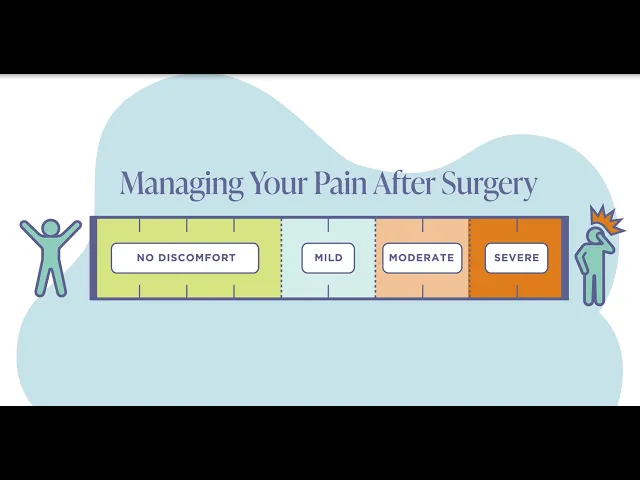
But the common 0-10 pain scale too often made that difficult. Our partnering providers shared concerns it created an unrealistic expectation of zero pain after surgery and could lead to overprescribing and risk of opioid use disorder. And that it also may have made it harder for patients to accurately measure and communicate their pain.
So, we collaborated to create a more accessible scale to better measure pain and tailor care plans. For mild or moderate discomfort and pain your provider can treat you with medications or techniques that manage pain without the side effects, risks and restrictions that come with taking opioids.
After all, our goal is to get you to function comfortably in your daily life again, so you can do the things you love.
Learn more about postoperative pain management on our resource page.
Description of imagery
An older man sitting in a chair appears. In a thought bubble, he pictures himself walking a dog. Then his face becomes anxious and the thought bubble disappears. Figures of other people appear who are experiencing pain. The man sits in an examination chair and consults with a physician. The chair morphs into a postsurgical hospital bed. A thought bubble linked to the man appears with random numbers and question marks while the physician scratches her head. People sit at a conference table while a speaker points to a whiteboard on which numbers 0 to 10 are written. The speaker points to notes on the board as they appear. A new pain scale appears, replacing the whiteboard scene. The man sits in a chair using ice therapy on his extended leg. The ice therapy machine disappears, and the man stands up carefully. He then begins to walk his dog slowly in a park.
